中国大陆首篇 | 厦大附一:AVEIR™ VR 无导线起搏器零并发症、零再次干预真实世界数据正式发布


无导线起搏器作为经静脉起搏系统的重要替代方案,近年来在全球范围内快速发展。随着技术演进,无导线起搏器已从单腔心室起搏拓展至单心房,和具备心房–心室同步能力的双腔系统,进一步扩大了适应证范围,并为更生理化的起搏策略奠定基础。


2025年12月,厦门大学附属第一医院谢强教授和郑武扬教授团队发表单中心AVEIR™ 无导线起搏器真实世界结果,填补中国大陆真实世界研究数据空白,为规范化使用这一新技术奠定临床基础,为后续临床应用提供指导性依据。


研究背景


永久性起搏器通常用于治疗由心动过缓性心律失常或传导阻滞引起的症状性、重度心动过缓。AVEIR™ VR 无导线起搏器于 2024 年 6 月在中国获批,其可回收设计为临床实践带来了新的选择与潜在优势。厦门大学附属第一医院起搏电生理团队在国内率先开展 AVEIR™ VR 无导线起搏手术,首日即成功完成 4 例植入,并在随后的 3 个月内快速完成本研究纳入的 16 例患者的植入及随访。本研究旨在系统评估 AVEIR™ VR 无导线起搏器在中国患者中的安全性与有效性。


研究方法


(一)研究对象


本研究为回顾性研究,选取2024年6月-10月厦门大学附属第一医院16例需植入永久起搏器的患者,平均年龄 71.31±11.8 岁,男性占62.5%。


(二)观察指标与统计方法


收集手术时长、透视时间、辐射剂量等手术相关数据,术前及术后1个月的起搏阈值、阻抗、R波感知等设备参数,以及经胸超声心动图(TTE)评估的心脏结构和功能指标。


三、研究结果


手术时间:所有患者植入成功率100%,平均手术时长67.8 min透视时间21.1min,辐射剂量285.4mGy,详见Table 1所有手术均顺利完成,术后即刻的起搏阈值良好(约 0.68 V/0.4 ms)。
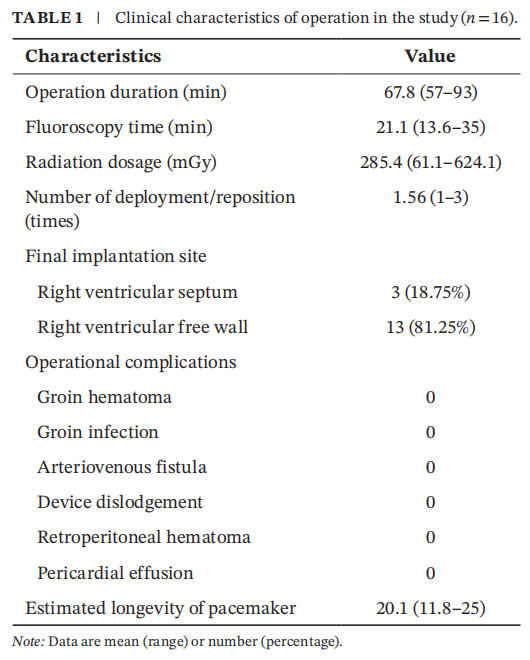


Table1


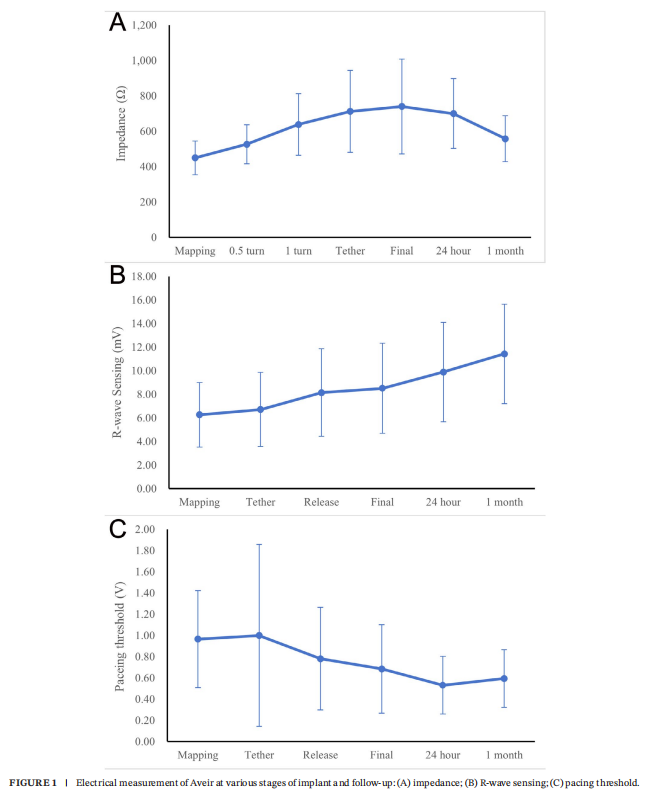
电学参数表现:术后1个月,起搏阈值从0.68±0.42 V降至0.59±0.27 V,阻抗从740.00±268.53 Ω降至557.5±129.69 Ω,R波感知从8.51±3.83 mV升至11.4±4.22 mV设备预估寿命 20.1 年。详见Figure 1。


Figure 1


术中安全性:AVEIR™ VR 的术前参数Mapping机制有助于减少重新定位次数。本研究中平均重新定位次数为 1.56 次。从而避免多次重新定位带来的并发症风险增加。


术后心功能:术前与术后1个月的主动脉、左右心房、心室舒张/收缩径、射血分数等TTE指标无显著差异,三尖瓣反流程度亦无明显变化。详见Table 2、Figure 2。
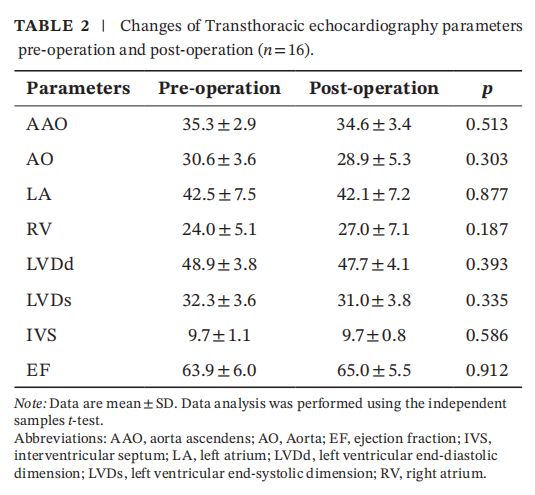

Table2
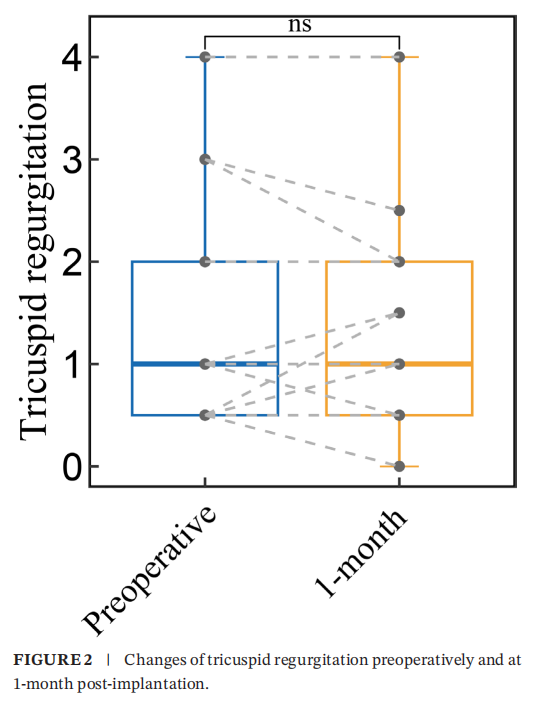
Figure 2


研究结论


  1. AVEIR™ VR无导线起搏器在中国患者中植入安全有效,无并发症发生。


  2. AVEIR™ VR 无导线起搏器并不会对右心功能造成不良影响。这一结果与先前研究相一致,即无导线起搏器由于避免了传统经静脉导线对三尖瓣的机械牵拉,更不容易引起三尖瓣功能障碍。


  3. 右室间隔和右室游离壁均为AVEIR™ VR安全植入部位,右室游离壁可作为替代选择。


研究局限性


  • 单中心、小样本量研究,统计效力有限;

  • 回顾性设计存在固有偏倚;

  • 随访仅1个月,可能未发现远期并发症。


结论


本研究结果表明,AVEIR™ VR 无导线起搏器在中国患者中的植入过程安全、有效,技术成功率高,且术后电参数稳定并持续改善。术后 1 个月随访显示,起搏阈值降低、阻抗下降及 R 波感知增强,提示装置在心脏内的适应性良好。超声心动图比较结果显示,植入前后心腔结构及右心功能无显著变化,三尖瓣反流程度亦未加重,进一步支持该无导线起搏器对心脏结构和瓣膜功能影响极小。此外,无论起搏器植入于右心室间隔或游离壁,均未出现严重并发症,显示两种植入部位均具备良好的安全性。


原文链接:Safety and Efficacy of Aveir Leadless Pacemaker in Chinese Patients - Zheng - 2026 - Annals of Noninvasive Electrocardiology - Wiley Online Library


厦门大学附属第一医院心血管内科简介


厦门大学附属第一医院心血管内科是国家心血管疾病临床医学研究中心分中心、国家卫健委冠脉介入培训基地、中国医师协会心律失常介入培训基地(导管消融与起搏器植入),福建省临床重点专科、厦门市重点专科,全国首批通过中国胸痛中心、房颤中心、心衰中心、高血压中心和国家标准化心脏康复中心认证,在心血管疾病的预防、诊疗和研究领域形成了自己的特色和优势,现已成为闽西南地区综合性医院规模最大、水平最高的集临床、教学、科研为一体的心血管病防治中心。

厦门大学附属第一医院心律失常中心是闽西南最早的心律失常研究机构和临床诊疗中心,拥有厦门市心脏电生理重点实验室、厦门大学心律失常和心脏电生理研究所,系福建省医学会心电生理及起搏分会副主任委员及厦门市医学会心电生理及起搏分会主任委员单位,年心律失常介入手术千余例。

厦门大学附属第一医院心律失常中心早在上个世纪八十年代即在闽西南率先开展永久性心脏起搏器植入和心律失常导管射频消融;2006年在李卫华书记领导下,由谢强副院长、郑武扬主任心律失常团队首批开展房颤导管消融,2015年全国首批开展房颤左心耳封堵术,2016年率先开展房颤冷冻球囊消融术,并在全国首创开展房颤“先左心耳封堵后冷冻消融”的一站式治疗模式,该项技术很快在全国得以普及;拥有房颤冷冻球囊全球带教资质专家、房颤左心耳封堵术全球带教资质,是省内唯一同时获得该两项带教资质的专家单位。近年来,团队在全国首批开展无导线心脏起搏器植入(目前例数全省首位,并在无导线起搏研究领域发表多篇学术论文);全国首批开展房颤脉冲消融,手术例数居全省前列;团队成员多次获邀在全国性学术会议上进行手术演示,并指导省内外多家兄弟医院开展房颤射频消融、冷冻球囊消融、脉冲消融、房颤左心耳封堵术、永久性心脏起搏器植入等技术。近年来,作为硕士、博士培养点及博士后流动站,中心承担国家级、省市级研科研项目25项,其中国家级7项,发表SCI收录论文30余篇,获得发明专利授权3项,获得福建省科技进步奖三等奖1项,厦门市科技进步奖2项,科研成果位居我省前列。在国家"健康中国"战略的引领下,中心将继续不懈努力,为心律失常领域在科技创新、临床救治及人才培养方面发挥更大作用。


参考文献:

⇅ 向上滑动阅览

1.Afzal, M. R., N. Shah, G. Daoud, and M. Houmsse. 2019. “Current State of Leadless Pacemakers: State of the Art Review.” Expert Review of Cardiovascular Therapy 17, no. 10: 699–706.

2.Bahbah, A., J. Sengupta, D. Witt, et al. 2024. “Device Dislodgement and Embolization Associated With a New Leadless Pacemaker.” Journal of Cardiovascular Electrophysiology 35, no. 12: 2483–2486.

3.Bhatia, N., and M. El-Chami. 2018. “Leadless Pacemakers: A Contemporary Review.” Journal of Geriatric Cardiology 15, no. 4: 249–253.

4.Boersma, L. V., M. el-Chami, C. Steinwender, et al. 2022. “Practical Considerations, Indications, and Future Perspectives for Leadless and Extravascular Cardiac Implantable Electronic Devices: A Position Paper by EHRA/HRS/LAHRS/APHRS.” Europace 24, no.10: 1691–1708.

5.Breeman, K. T., K. T. N. Breeman, F. V. Y. Tjong, et al. 2024. “Ten Years of Leadless Cardiac Pacing.” Journal of the American College of Cardiology 84, no. 21: 2131–2147.

6.Cantillon, D. J., S. R. Dukkipati, J. H. Ip, et al. 2018. “Comparative Study of Acute and Mid-Term Complications With Leadless and Transvenous Cardiac Pacemakers.” Heart Rhythm 15, no. 7:1023–1030.

7.Hauser, R. G., C. C. Gornick, R. H. Abdelhadi, C. Y. Tang, S. A. Casey, and J. D. Sengupta. 2021. “Major Adverse Clinical Events Associated With Implantation of a Leadless Intracardiac Pacemaker.” Heart Rhythm 18, no. 7: 1132–1139.

8.Honarbakhsh, S., L. Hunter, A. Chow, and R. J. Hunter. 2018.“Bradyarrhythmias and Pacemakers.” BMJ 360: k642.

9.Ip, J. E. 2023a. “Conventional and Novel Methods for Early Retrieval a Helix-Fixation Leadless Cardiac Pacemaker.” JACC: Clinical Electrophysiology 9, no. 11: 2392–2400.

10.Ip, J. E. 2023b. “Advanced Helix-Fixation Leadless Cardiac Pacemaker Implantation Techniques to Improve Success and Reduce Complications.”Journal of Cardiovascular Electrophysiology 34, no. 5: 1268–1276.

11.Kin Tam, M. T., A. K. Y. Chan, A. C. Kin Au, L. Cheung, G. C. Pang Chan, and J. Y. Sun Chan. 2022. “Effect of Low Body Mass Index in Outcome of Micra Leadless Pacemaker Implantation.” Journal of the Hong Kong College of Cardiology 29, no. 2: 43–52.

12.Lee, J. Z., S. K. Mulpuru, and W. K. Shen. 2018. “Leadless Pacemaker:Performance and Complications.” Trends in Cardiovascular Medicine 28, no. 2: 130–141.

13.Marzlin, K. M. 2020. “Bradycardia and Cardiac Conduction Delay Guideline Update.” AACN Advanced Critical Care 31, no. 3: 340–344.

14.Morita, J., Y. Kondo, Y. Kasai, and T. Kitai. 2024. “Retrieval of the Aveir Leadless Pacemaker With the Double-Snare Technique.” European Heart Journal—Case Reports 8, no. 6: ytae267.

15.Nair, D. G., D. V. Exner, V. Y. Reddy, et al. 2024. “Early Real-World Implant Experience With a Helix-Fixation Ventricular Leadless Pacemaker.” Journal of Interventional Cardiac Electrophysiology 67, no.7: 1539–1545.

16.Ngo, L., D. Nour, R. A. Denman, et al. 2021. “Safety and Efficacy of Leadless Pacemakers: A Systematic Review and Meta-Analysis.”Journal of the American Heart Association 10, no. 13: e019212.

17.O'Connor, M., U. Barbero, D. B. Kramer, et al. 2023. “Anatomic,Histologic, and Mechanical Features of the Right Atrium: Implications for Leadless Atrial Pacemaker Implantation.” Europace 25, no. 9: euad235.

18.Reddy, V. Y., D. V. Exner, R. Doshi, et al. 2022. “Primary Results on Safety and Efficacy From the LEADLESS II-Phase 2 Worldwide Clinical Trial.” JACC: Clinical Electrophysiology 8, no. 1: 115–117.

19.Sharma, A. K., H. Badoliya, J. Jain, et al. 2022. “AVIER Leadless Pacemaker (Implantable Pacemaker Pulse Generator): A Review.” International Journal of Current Pharmaceutical Review and Research 14, no. 2: 24–27.

20.Sriramoju, A., S. K. Iyengar, and K. Srivathsan. 2024. “Navigating Complications in Cardiac Pacemakers: A Comprehensive Review and Management Strategies.” Reviews in Cardiovascular Medicine 25, no. 8: 299.

21.Steinwender, C., P. Lercher, C. Schukro, et al. 2020. “State of the Art: Leadless Ventricular Pacing: A National Expert Consensus of the Austrian Society of Cardiology.” Journal of Interventional Cardiac Electrophysiology 57: 27–37.

22.Tang, J. E., S. J. Savona, and M. K. Essandoh. 2022. “Aveir Leadless Pacemaker: Novel Technology With New Anesthetic Implications.”Journal of Cardiothoracic and Vascular Anesthesia 36, no. 12: 4501–4504.

23.Trohman, R. G. 2025. “Leadless Pacing: Current Status and Ongoing Developments.” Micromachines 16, no. 1: 89.

24.Turagam, M. K., R. Gopinathannair, P. H. Park, et al. 2020. “Safety and Efficacy of Leadless Pacemaker for Cardioinhibitory Vasovagal Syncope.” Heart Rhythm 17, no. 9: 1575–1581.

25.Vouliotis, A. I., P. R. Roberts, P. Dilaveris, K. Gatzoulis, A. Yue, and K. Tsioufis. 2023. “Leadless Pacemakers: Current Achievements and Future Perspectives.” European Cardiology 18: e49.

26.Yarlagadda, B., M. K. Turagam, T. Dar, et al. 2018. “Safety and Feasibility of Leadless Pacemaker in Patients Undergoing Atrioventricular Node Ablation for Atrial Fibrillation.” Heart Rhythm 15, no. 7: 994–1000.

27.Zucchelli, G., S. Tolve, V. Barletta, et al. 2021. “Comparison Between Leadless and Transvenous Single-Chamber Pacemaker Therapy in a Referral Centre for Lead Extraction.” Journal of Interventional Cardiac Electrophysiology 61, no. 2: 395–404.


阅读数: 4214